Start with evidence you can see
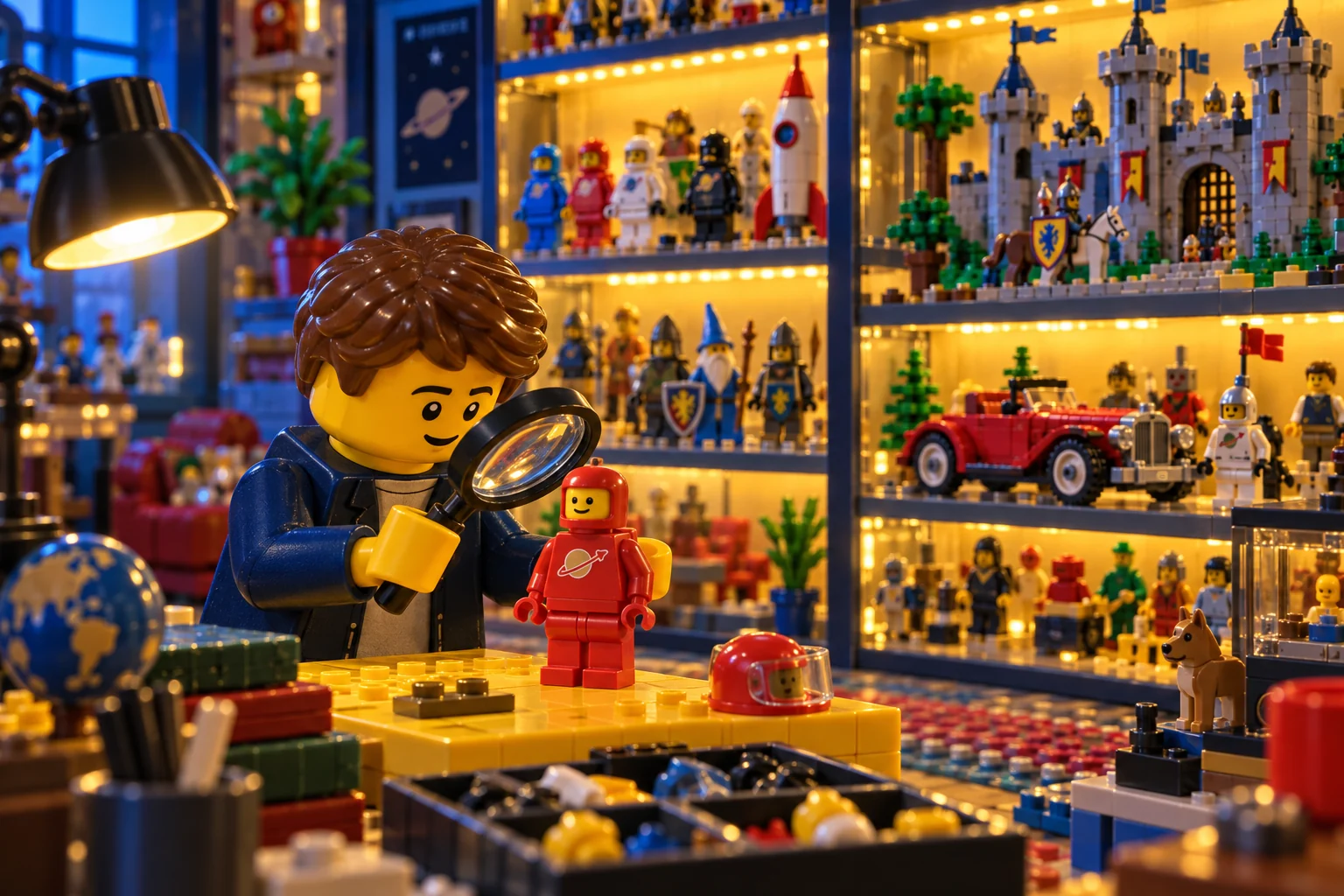
A figure found in a mixed box may have the wrong head, hair, or accessory. Treat it as a collection of parts first. Photograph the front and back in even light. Note torso printing, leg printing, unusual molded shapes, and the color of each part. A generic smiling head is weak evidence; a printed torso or specialized headpiece may narrow the search sharply. If a result looks close but one print differs, keep looking.
Use the set number if you have a box or instructions nearby. LEGO explains that set numbers appear on packaging and instructions and can be entered in its instruction search. Rebuilding the original set is often a quicker route to a figure's identity than searching a figure catalog from scratch. If you do not have the set number, look at the part itself: LEGO says a small design number may be molded inside a piece, while newer instruction inventories list element numbers. Those numbers identify parts, not necessarily the assembled character.
Check the combination
Once you find a possible match, compare every visible component to a reliable inventory or official product image. A single torso can appear with different heads or legs across releases. Small changes in face print, accessory, or color can separate two variants. The goal is a reproducible identification: someone else should be able to follow your photos and arrive at the same result. If the figure is assembled from unrelated parts, call it a custom combination rather than forcing a catalog identity.
When the original set is incomplete, LEGO's instructions service can help reconstruct what belonged together. The replacement-parts service lets you search using set, element, or design information, although availability changes. Write down the likely set number and any uncertainty instead of relying on memory. A label such as 'torso likely from set X; head unconfirmed' is more useful than an overconfident name.
Preserve condition and context
Separate the figure gently if you need to inspect a hidden mark. Do not scrape printing or force a tight neck joint to settle an identification. Photograph cracks, discoloration, and missing accessories as they are. These details matter to a collector, but they also tell the story of a toy that has been played with.
The most satisfying result is sometimes a confirmed mismatch. It means you have learned what is in the box and can either restore the figure or keep a memorable custom character. Identification should make the collection easier to understand, not erase its history.