
Edition: 2026-09-23. Evidence: 72 dossiers, observed 2026-09-23. Note: no newcomer-FAQ source was available in this research pass, so the "frequently asked questions" below are reconstructed from the recurring owner-discourse patterns in the evidence — labeled as such where they appear.
Start here
LEGO in 2026 is not one hobby. It's a toy company, a display-piece manufacturer, a licensed-merchandise machine, and a secondary market with its own authentication economy — and the set that's perfect for one buyer is a trap for another. The single most useful thing a beginner can know: the price on the box is the starting bid, not the price. Discounts are the norm across almost every line (the Botanicals Orchid sells at ~$32 street against a $49.99 MSRP; helmet-line buyers routinely wait for 30%+ off), and the sets that don't discount are the ones that sell out (Pokémon 72153, with its one-per-customer limit). Your first decision isn't which set — it's which kind of LEGO buyer you are: builder, displayer, gift-giver, or collector. This guide is written for the first three; the collector's game (rare minifigures, retired sets) has its own authentication rules and its own risks, and you should read those category reviews before spending there. The second most useful thing: the community's forums are the buying guide. Eurobricks threads, Brickset comments, and owner reviews have already made every mistake you're about to make.
The jargon decoder
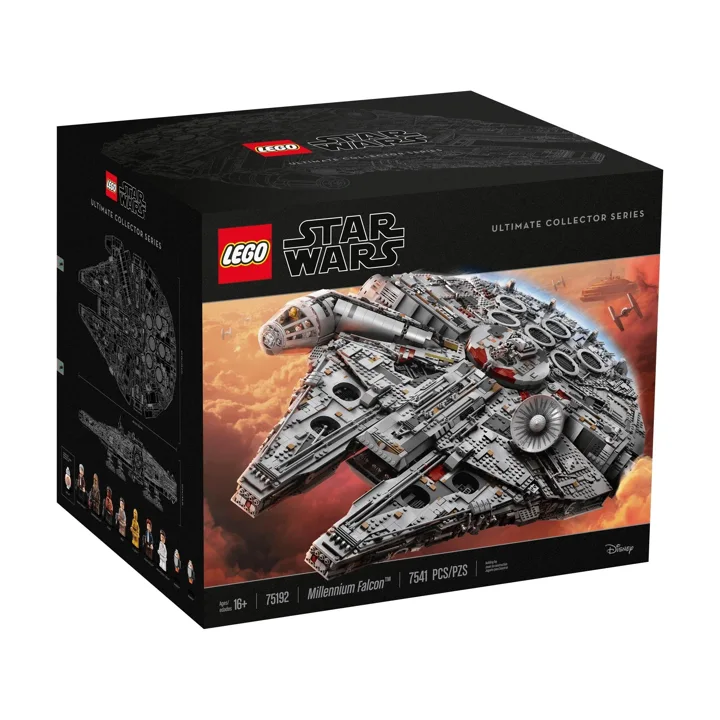
MSRP / RRP: the box price. Almost nobody's final price — except on sets that sell out. UCS (Ultimate Collector Series): the big Star Wars flagships (75192 Falcon, 75313 AT-AT). Expensive, fragile, shelf-hungry. CMF (Collectible Minifigures): blind-boxed single figures ($4.99). The Shrek series (71053) is box-scannable via the Brick Search app — no need to gamble on the draw. EOL (End of Life): retired; no longer made. The Flower Bouquet (10280) went EOL in July 2026. GWP (Gift With Purchase): free sets included with orders over a threshold — the real reason to buy direct from LEGO.com during promotions. Stepdown: the Ideas-line phenomenon where the fan design loses pieces on the way to retail (E.T.: 2,990 → 1,226 pieces). AFOL: Adult Fan of LEGO. The community whose forums (Eurobricks, Brickset comments) are the best honest buying advice in the hobby. CONTROL+: LEGO's app-controlled motor system. The app is the remote — no app, no function. Blind box / blind bag: sealed packaging where you can't see which figure is inside. The Brick Search app's scanner defeats the blindness. Part-out value: what a set's pieces would sell for individually — the resellers' metric. Sealed premium: the extra a never-opened retired set commands. Real, widely discussed, and almost never documented with a dated sale — treat quoted premiums as lore, not data.
What to buy, by budget
Under $50: the gift tier. The 10311 Orchid ($49.99 MSRP, ~$32 street) is the default — "the closest we'll get to a perfect LEGO set" and "Great gift for a plant lover (this one won't die)." Handle it gently once posed; the petals are display-grade. The 10369 Plum Blossom ($29.99) is the cheapest entry. For Marvel fans, the 76345 Doctor Doom Bust ($49.99) is the sleeper — zero stickers, all printed, with a "FANTASTIC" minifigure — but wait for the line's reliable ~20% discounts (target ~$40). The Shrek CMF series at $4.99 a box is the cheapest way to own current LEGO, but buy the complete pre-scanned set rather than gambling on blind boxes.
$50–$150: the first real set. The 43024 Ayrton Senna Helmet ($89.99 MSRP, already $75 at Walmart) is the helmet-line entry — near-total printing, retro cool — but never pay full price; the line discounts deeply. The 21370 E.T. ($139.99) is the current Ideas conversation: warm early sentiment, light-up heart, posable figure. The 75461 Darth Vader ($99.99) is the Star Wars display pick — but know the chest, eyes, and mouth are stickers, the line's signature complaint.
$150–$300: the commitment tier. The 42110 Land Rover Defender ($199.99, retired — buy used) is the best engineering-per-dollar in the Technic line: working 4-speed gearbox, AWD with three differentials. The honest warning: the gearbox crackles under load, and the Eurobricks mods thread is the required companion reading. The 21367 Tintin Moon Rocket ($159.99) is the beautiful finished object — "Build - Repetitive | Finished - Beautiful!" — but wait for a discount; $160 for 1,283 pieces is the whole debate. The 71861 NINJAGO Old Town ($299.99) is the anniversary centerpiece with 23 minifigures — but 63 stickers at $300, so know what you're buying.
$300+: the flagship tier. The 10316 Rivendell ($499.99) is the consensus best large build — "a near-perfect LEGO set" — and it discounts regularly, so wait. The 10294 Titanic ($679.99) is the most satisfying build in the hobby ("Best Lego set out there by far") — but you need a room, not a shelf. The 72153 Pokémon set ($649.99) is the cultural moment — buy only at LEGO.com at MSRP; never pay the ~$1,200 third-party markups. The 10365 Pirate Ship ($379.99) is the best-reviewed build of the 2026 wave (4.9★ across 191 Amazon.ca reviews).
What about the $450 Technic flagships? The 42172 McLaren P1 ($449.99, current) is the current 1:8 supercar — satisfying, with the line's familiar fragile-door compromise. The 42131 CAT D11 ($449.99) is the "only on discount or used" rule made flesh — the loudest value complaints in the Technic line, plus app dependence. Beginners should not start with either; start with the Defender.
The LEGO.com strategy. Buying direct isn't about loyalty — it's about the bundle math. LEGO.com runs gift-with-purchase promotions, double Insiders points events, and exclusive sets (Pokémon is LEGO.com-only while it sells out). The savvy beginner buys the hype sets at LEGO.com during a GWP window and everything else at street-discount retailers — patience plus opportunism, in that order. The 2026 Florida LEGOLAND owner evidence even confirms the pattern at the parks: "tickets bought direct with a three-minifigure-creation + lunch + parking bundle" was "very convenient and economical." Direct for the promos, street for the discounts.
Mistakes beginners make
Paying full price on day one. The September 2026 price backlash across SpongeBob, Star Trek, and the Ministry of Magic exists because the MSRPs are license-priced. The sets are good; the prices are the debate. Patience is the whole strategy — with the single exception of sets that sell out (Pokémon), where the strategy is buying at LEGO.com immediately.
Buying the retired set before learning the authentication rules. The secondary market has no verified sold-price record for most retired sets in this research pass — asking prices are not sold prices, YouTube titles are not transactions, and the Mr. Gold market has 20 fakes for every real figure. Read the retired-legends and rare-minifigures reviews before spending over $100 on anything retired.
Ignoring the sticker count. Stickers vs. printed parts is the hobby's most consistent complaint, and it concentrates in licensed sets: the Enterprise bridge has 44, the NINJAGO Old Town has 63, Boba Fett and Darth Vader both sticker pieces that should have been printed. If stickers bother you, the Doom bust (zero) and the Senna helmet (near-total printing) are the exceptions that prove the rule.
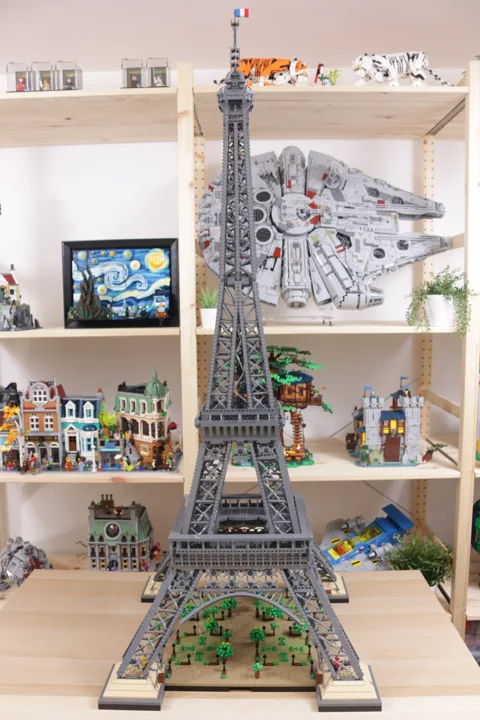
Buying the display piece without measuring. The Titanic is the size of a double door. The UCS Gunship is 74 cm wide. The Eiffel Tower is a meter tall. The number-one owner regret in the large-build categories is space, not price. Measure first.
Expecting the app to be forever. CONTROL+ sets (42100 Liebherr, 42131 D11) are bricks with a software dependency. Check that the app runs on your phone before buying, especially used.
Buying the gift without the accessory. The Flower Bouquet has no vase. The Orchid's pot is built in, but the bouquet's isn't — and "just be sure to check they have a spare vase" is the most repeated gift advice in the category. A $60 bouquet without a vase is a $60 chore.
Trusting the reveal photos. The Kiss looked "atrocious" in reveal shots and stunning in owner photos; E.T.'s stepdown debate was entirely pre-release. Wait for built reviews on anything over $100 — the community's cameras are the honest marketing department.
Where to go next
If you bought the Orchid and want more: the Botanicals line is deep (Bouquet before it's gone — bring a vase). If you bought the Defender and want harder: the Technic 1:8 supercars, used Sián for value. If you bought E.T. and want the line: the Ideas back catalog — Home Alone for December, the Typewriter for the mechanism. If you caught the bug badly: the Star Wars helmet line is the best-value display shelf in licensed LEGO, and the UCS Falcon is the endgame. And if you're buying for kids: the LEGOLAND parks' 2026 owner verdict is that the parks are for ages 2–12, the sets are for everyone, and the minifigure trading posts are the cheapest souvenir in the building. Billund is the pilgrimage if you ever make the trip; Florida is the best US multi-day. Wherever you go next, the rule doesn't change: buy the set for the build or the shelf, never for the investment thesis — the market's transaction record is thinner than its marketing.
Sources
Named sources are cited in the text above; no direct source URLs were captured in this research pass.